The Science Behind the Experience
Where Intentional Breath Meets Immersive Technology
9D Breathwork brings together intentional breathing, immersive sound, guided language, and focused attention to create a deeply engaging mind-body experience.
While breathwork has roots in practices used across cultures for centuries, modern research is beginning to explore how deliberate changes in breathing may influence stress, attention, cardiovascular rhythms, and autonomic regulation.
PureBreath Wellness takes a science-informed approach to this evolving field. Our workplace experiences emphasize gentle, accessible breathing patterns and thoughtfully layered audio designed to help employees step away from external demands and turn their attention inward.
Rather than presenting 9D Breathwork as a medical treatment, we see it as a modern wellness experience built around something remarkably fundamental: the relationship between the breath, body, attention, and state of mind.
THE WELLNESS SHIFT
One Experience. Several Intentional Layers.
9D Breathwork is not simply a breathing exercise or an audio meditation. The experience brings several elements together, each serving a different purpose.
Intentional Breathing
A bridge between conscious choice and automatic physiology
Breathing happens automatically, but unlike many functions of the autonomic nervous system, we can also intentionally change the way we breathe.
By consciously adjusting breathing rhythm, pace, and depth, we can interact with physiological processes connected to heart rhythm, arousal, and autonomic regulation.
This is part of what makes breath such an interesting tool for wellness: it gives us a simple, accessible way to intentionally influence our internal state through the body.
Slow, Down-Regulating Breath Practices
Creating conditions that support a calmer state
The corporate 9D experiences offered by PureBreath Wellness primarily use gentle, slower breathing patterns rather than the highly activating techniques sometimes associated with intensive breathwork.
Research on slow-paced breathing has found measurable changes in heart-rate variability and cardiovascular rhythms associated with parasympathetic regulation. A large systematic review and meta-analysis of more than 200 studies found increases in vagally mediated heart-rate variability during slow breathing, immediately afterward, and following repeated practice.
In practical terms, slowing and regulating the breath may help create physiological conditions that are more compatible with settling, presence, and relaxation.
Immersive Sound & Focused Attention
Creating space away from the noise of the day
Modern work environments are filled with competing inputs — conversations, notifications, deadlines, screens, and constant shifts in attention.
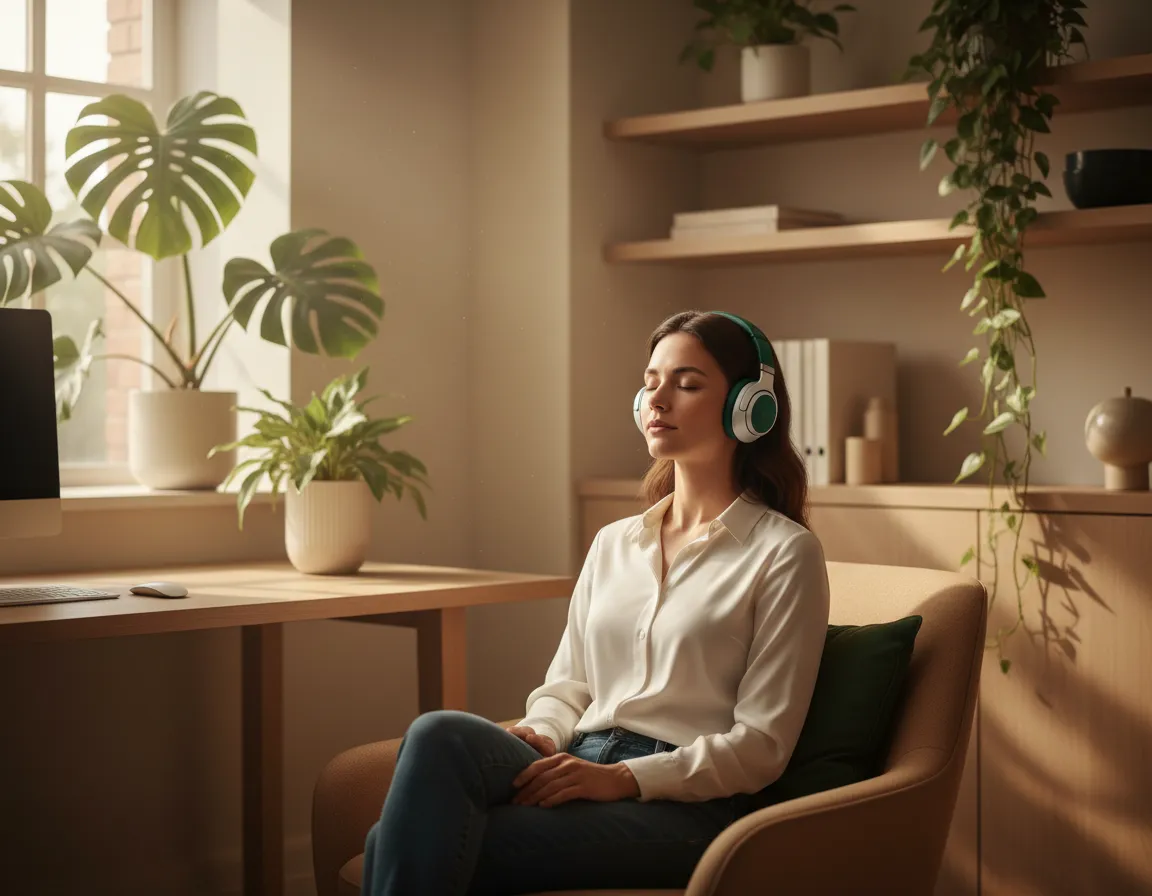
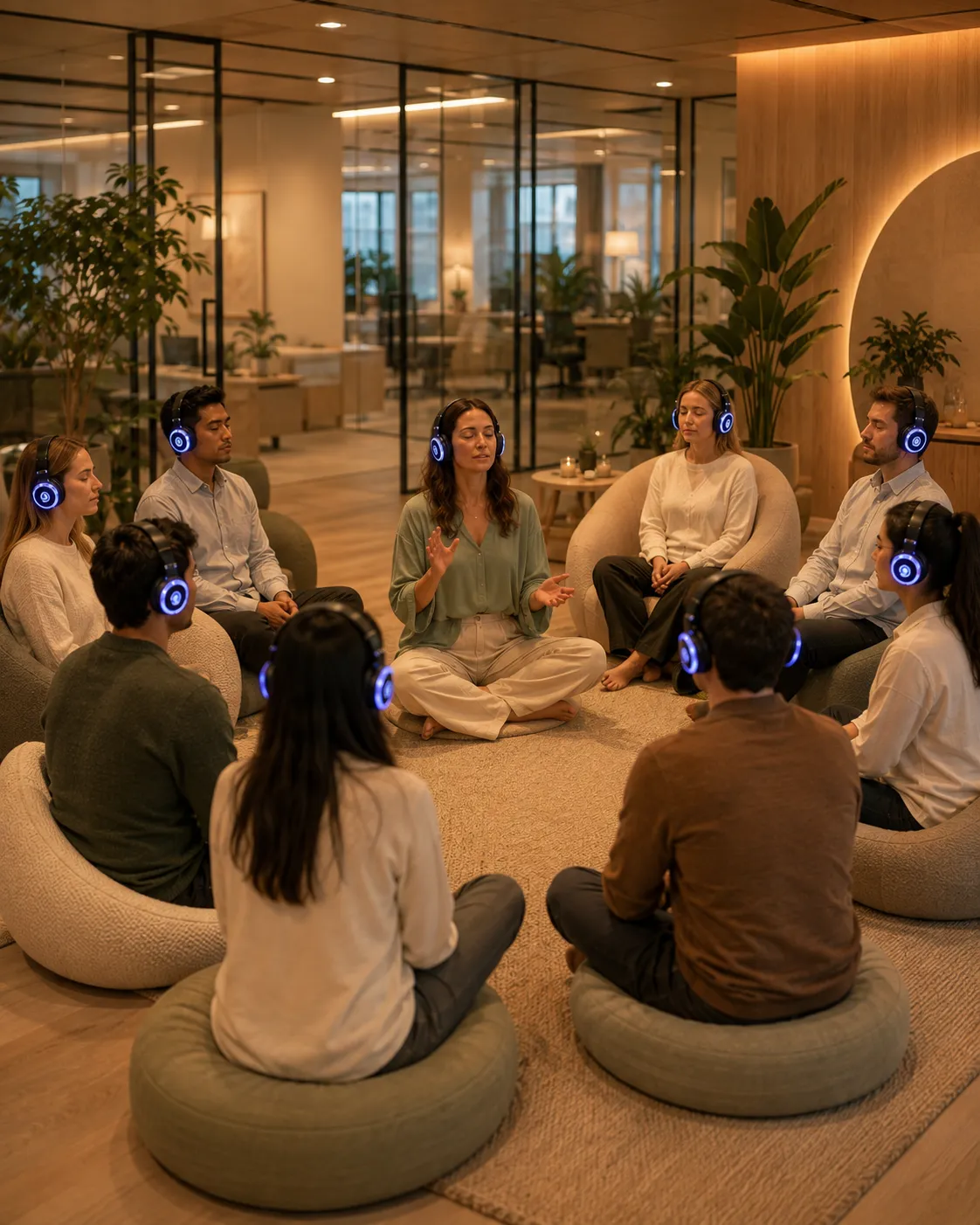
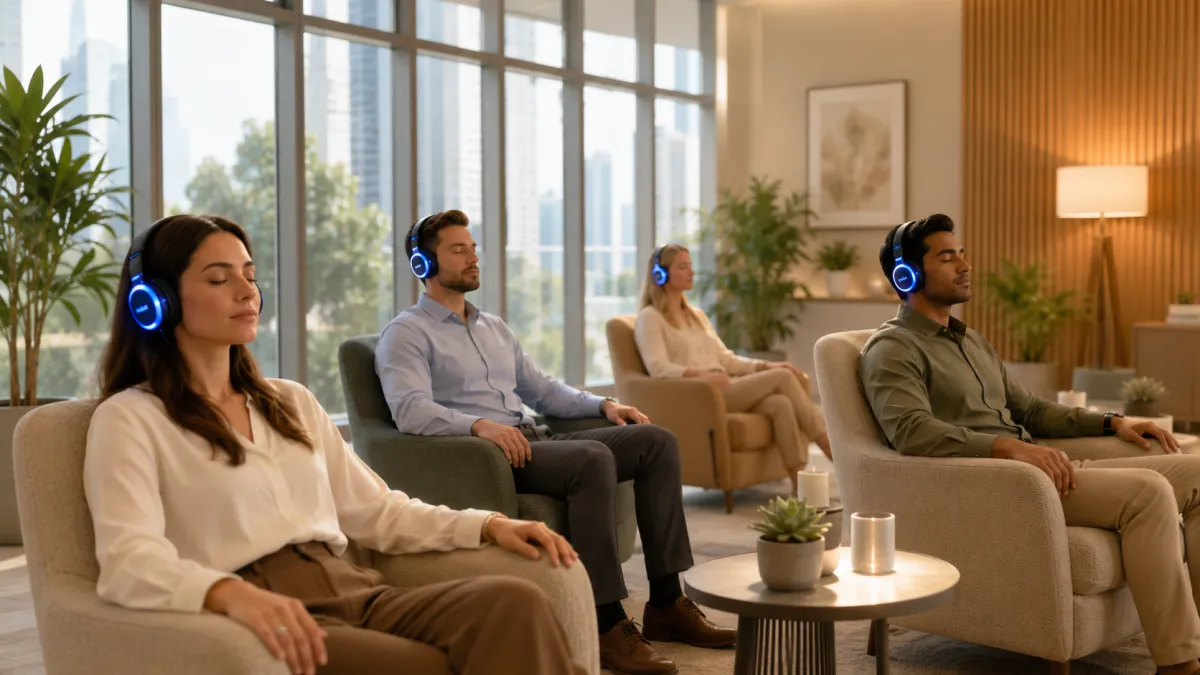
The headphone-based design of 9D creates a more contained listening environment, helping soften outside distractions and giving participants a dedicated space to focus on the experience in front of them.
Rather than simply listening to wellness information, participants are immersed in a 9-Dimensional soundscape experience that combines breath, sound, voice, and attention.
This inward focus is an important part of what makes 9D feel so different from a traditional workplace wellness presentation.
Binaural Beats & Spatial Audio
Using sound as another layer of the experience
Some 9D Breathwork journeys incorporate binaural beats and spatially layered sound.
Binaural beats are created when slightly different tones are presented separately to each ear through headphones. The brain perceives the difference between those frequencies as an additional rhythmic auditory sensation.
Research into binaural-beat stimulation is still developing. Recent systematic reviews have reported promising findings in areas such as anxiety, relaxation, pain, sleep, and certain aspects of cognition.
PureBreath does not present binaural beats as a proven treatment or suggest that a specific frequency will produce a guaranteed psychological response.
Instead, we view them as one of several auditory tools used to deepen immersion and support the overall experience.
Guided Language, Visualization & Reflection
Giving the mind somewhere intentional to go
The words we focus on can shape where we place our attention.
Throughout a 9D experience, guided language, visualization, reflective prompts, and intentional pauses may be woven into the audio journey to encourage participants to become more aware of their breath, body, thoughts, priorities, and internal experience.
Guided imagery and related attention-based practices have been studied in a wide range of clinical and wellness settings, with research suggesting potential benefits for relaxation and anxiety in some populations.
Within PureBreath Wellness, these techniques are not used as psychotherapy. They simply provide structure and direction for reflection while the participant remains fully in control of their own experience.
What Does the Research Actually Say?
Breathwork & Stress Regulation
Research into intentional breathing has expanded considerably in recent years, with growing evidence that structured breathing practices can influence both how stress feels and how the body responds to it.
A systematic review examining 58 studies of breathing practices for stress and anxiety evaluated 72 different breathing interventions. Fifty-four of those 72 interventions were found to be effective, with researchers identifying guided instruction, practices lasting at least five minutes, and repeated sessions among the characteristics commonly associated with successful outcomes.
The findings support something beautifully simple: intentionally changing the way we breathe can become a practical tool for helping the body and mind respond differently to stress.
Even a Few Minutes of Breathwork Can Make a Difference
A randomized controlled study led by researchers at Stanford University School of Medicine compared several five-minute daily breathing practices with mindfulness meditation over the course of one month.
All of the breathing practices were brief, but the researchers found that breathwork—particularly an exhale-focused breathing practice—produced greater improvements in positive mood and greater reductions in respiratory rate than mindfulness meditation. The researchers concluded that even brief structured breathing practices may offer an accessible way to improve mood and reduce physiological arousal.
For the workplace, this is especially meaningful: supporting regulation doesn't necessarily require removing employees from their day for hours at a time. Even relatively short periods of intentional breathing can create measurable changes.
Breathing Through Stress — Not Just After It
Recent research is also beginning to explore what happens when breathing practices are used around moments of acute stress.
In a 2026 randomized controlled trial, researchers assigned participants to box breathing, prolonged-exhalation breathing, or normal breathing before exposing them to a standardized psychological stress challenge.
Those who practiced either box breathing or prolonged-exhalation breathing showed a reduced stress response, including smaller increases in heart rate, state anxiety, and salivary alpha-amylase compared with the normal-breathing group.
The findings suggest that brief intentional breathing may help buffer some of the body's psychological and physiological responses when stress arises.
These types of slower, regulated breathing patterns are among the gentle techniques commonly incorporated into workplace-focused PureBreath experiences.
Research in the Workplace
The benefits of intentional breathing have also been studied directly in employees.
In a randomized study involving 75 full-time employees, participants were first exposed to cognitive and emotional stress and then given a brief five-minute recovery period using guided breathing, a mindfulness body scan, or no intervention.
Employees in the breathing group demonstrated significantly stronger heart-rate variability measures during recovery than participants in either of the other groups—a physiological pattern associated with autonomic adaptability and recovery following stress.
For organizations, research like this is particularly interesting because it moves the conversation beyond simply feeling relaxed. It suggests that intentional breathing may also support the body's ability to recover after periods of demand and stress.
Breath, Attention & Mental Clarity
Breathing practices may influence more than relaxation alone.
In another controlled study of healthy adults, participants completed eight weeks of diaphragmatic breathing training. Compared with controls, the breathing group demonstrated reduced negative affect, improved sustained attention, and lower salivary cortisol following the intervention.
While one study cannot establish that breathing will improve every person's concentration or workplace performance, findings like these help researchers understand why people often describe feeling not only calmer after intentional breathing, but also more present and mentally clear.
A Growing Body of Evidence
The science of breathwork is still evolving, and different breathing patterns, study populations, and protocols can produce different results. What is becoming increasingly clear, however, is that the breath is not simply something happening in the background. Changing the way we breathe can influence measurable aspects of physiological arousal, autonomic regulation, mood, attention, and the stress response.
9D Breathwork brings intentional breathing together with immersive sound, guided language, focused attention, and reflection to create a multidimensional wellness experience. Research has examined many of these elements individually; the complete proprietary 9D experience itself should not be interpreted as a clinically validated treatment.
PureBreath Wellness is science-informed, not science-exaggerated. We draw from a growing body of research while allowing each participant's experience to speak for itself.
More Than One Ingredient
The experience may be greater than any single component. 9D Breathwork combines several practices into one immersive experience:
Breath.
Sound.
Focused attention.
Guided reflection.
Visualization.
Music.
A dedicated pause from outside stimulation.
Science can study these components individually — and researchers increasingly are.
What has not yet been established is that the complete proprietary 9D Breathwork experience produces a specific clinical outcome simply because its individual components have been studied.
We believe that distinction is important.
Rather than borrowing scientific findings and turning them into promises, PureBreath uses the research to help inform how we thoughtfully deliver the experience.
Why This Matters in the Workplace
Employees don't necessarily need another lesson about stress.
Sometimes what they need is an opportunity to temporarily step away from everything requiring their attention.
A guided breathwork experience creates intentional space to slow the pace, redirect attention inward, and reconnect with the body before moving back into the demands of the day.
For some participants, that may feel deeply relaxing. Others may notice greater perspective, mental spaciousness, renewed motivation, or simply the benefit of having uninterrupted time to themselves.
Experiences vary from person to person — and we believe they should.
PureBreath does not promise a particular emotional, physiological, or productivity outcome. Our role is to create a thoughtful environment in which employees have the opportunity to experience the practice for themselves.
Science-Informed. Human-Centered.
The field of breathwork research is growing, and there is still much to learn.
We see that as something to be excited about — not something to hide.
9D Breathwork brings together established and emerging wellness practices. Research into intentional breathwork and several of the individual elements used within the experience is promising and continues to evolve. PureBreath Wellness does not present 9D Breathwork as medical care, psychotherapy, mental-health treatment, or a replacement for professional healthcare.
We believe the most responsible approach is also the most powerful one:
Respect the research.
Avoid exaggerated promises.
Create an exceptional experience.
And allow people to discover what the breath can offer them for themselves.
Research & References: Bentley et al., Brain Sciences (2023); Balban et al., Cell Reports Medicine (2023); McAllister et al., Comprehensive Psychoneuroendocrinology (2026); Chelidoni et al., JMIR mHealth and uHealth (2020); Ma et al., Frontiers in Psychology (2017); Laborde et al., Neuroscience & Biobehavioral Reviews (2022).
Research cited reflects studies of intentional breathing and related breathing practices. These studies did not evaluate the proprietary 9D Breathwork experience as a whole)
Restoring workplace energy through conscious breathing and immersive sound.
[email protected] | 727-910-5727


© 2026 PureBreath Wellness. All rights reserved.